
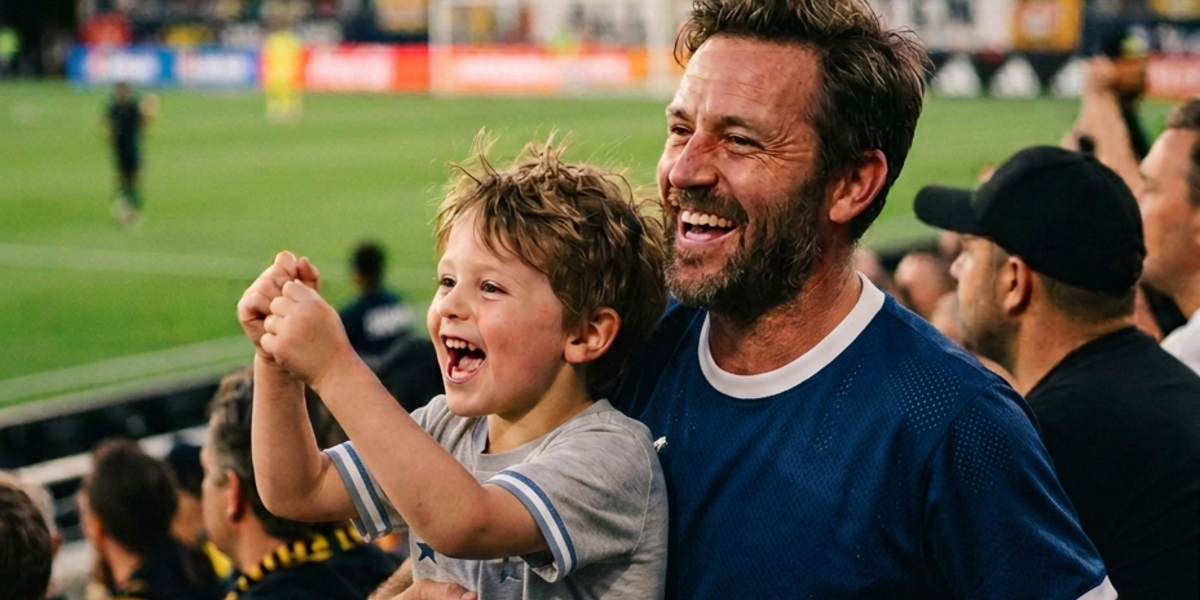
There's a kind of goodbye that doesn't need words. It happens on the couch at 2 P.M. on a Sunday, when your child wears a jersey with the same number you wore at their age and watches the same player you did, not knowing it's the last time. You know. That's the ache, you're holding onto an ending your child hasn't noticed yet, and for a few minutes, you both sit with that quietly.
As a sport psychology professional, I often remind people that being a fan isn't just entertainment. The bond we form with an athlete we've watched for twenty years is like any long-term attachment. It grows slowly, through repetition, shared highs and lows, and the strange feeling of knowing someone we've never met. So when Cristiano Ronaldo says this World Cup is his last, or Riyad Mahrez says it's "the new generation's turn to play," the feeling isn't nostalgia. It's grief, small, specific, and real, because a true bond is ending. In a recent NPR article covering the farewells of this summer's tournament, Ronaldo, Neymar, Ochoa, and Neuer are among those who said their final goodbyes, collapsing in tears, bowing to fans, and kissing the post before walking away for good. Striker Report captured it well in their piece The Last Dance: Every Football Legend Saying Goodbye at the 2026 World Cup, calling it one of the most emotionally significant retirement waves in the tournament's modern history.
But tournaments like this show us the other side too. When a player like Lionel Messi, in his last World Cup, sets up a winning goal in a late semifinal and sends his team to the final, he hasn't said goodbye yet. He gives himself and everyone watching one more game. That brings its own kind of ache, not mourning an ending, but hoping, even if it feels unlikely, that it doesn't come yet. If you've ever held your breath during stoppage time, you weren't just watching a soccer match. You were watching someone try to delay their own farewell, and quietly hoping he could do it.
What makes this summer different is what's happening underneath: we're not just losing our childhood idols, we're watching our kids discover them as they say goodbye. That's a big step in growing up. Part of becoming an adult is learning to invest in something you know you'll eventually pass on, psychologists call this generativity, the instinct to support the next generation instead of holding on for ourselves. Watching Manuel Neuer come out of retirement to help his team's younger players, or seeing Neymar take his final bow on the same field where he started, shows us how to let go of something you love without resenting those who come after.
For families, the real gift of this summer isn't the tournament. It's the rehearsal. Kids don't yet have language for the idea that things, and people, end. Watching a hero age out, together, on a couch, gives them a low-stakes place to practice that truth before it shows up somewhere heavier. You get to be the one who says, without needing to say it outright, that this mattered, that it's ending, and that it's okay to feel both at once.
So if you feel emotional watching a 41-year-old man leave the soccer field this summer, or if you hold your breath during stoppage time hoping for one more game, you're not being dramatic. You're doing what families have always done, passing down not just a favorite player, but the practice of loving something enough to let it go well. The connections we build around sport go beyond the players themselves, and as explored in Daniel's article When the Season Ends, Belonging Remains, that sense of community and shared identity tends to outlast any individual farewell. Whenever that final whistle comes, it's worth watching together. And if you're thinking about how to carry a healthy relationship with sport into everyday life, his article Building a Healthy Relationship with Exercise is a good place to start.